
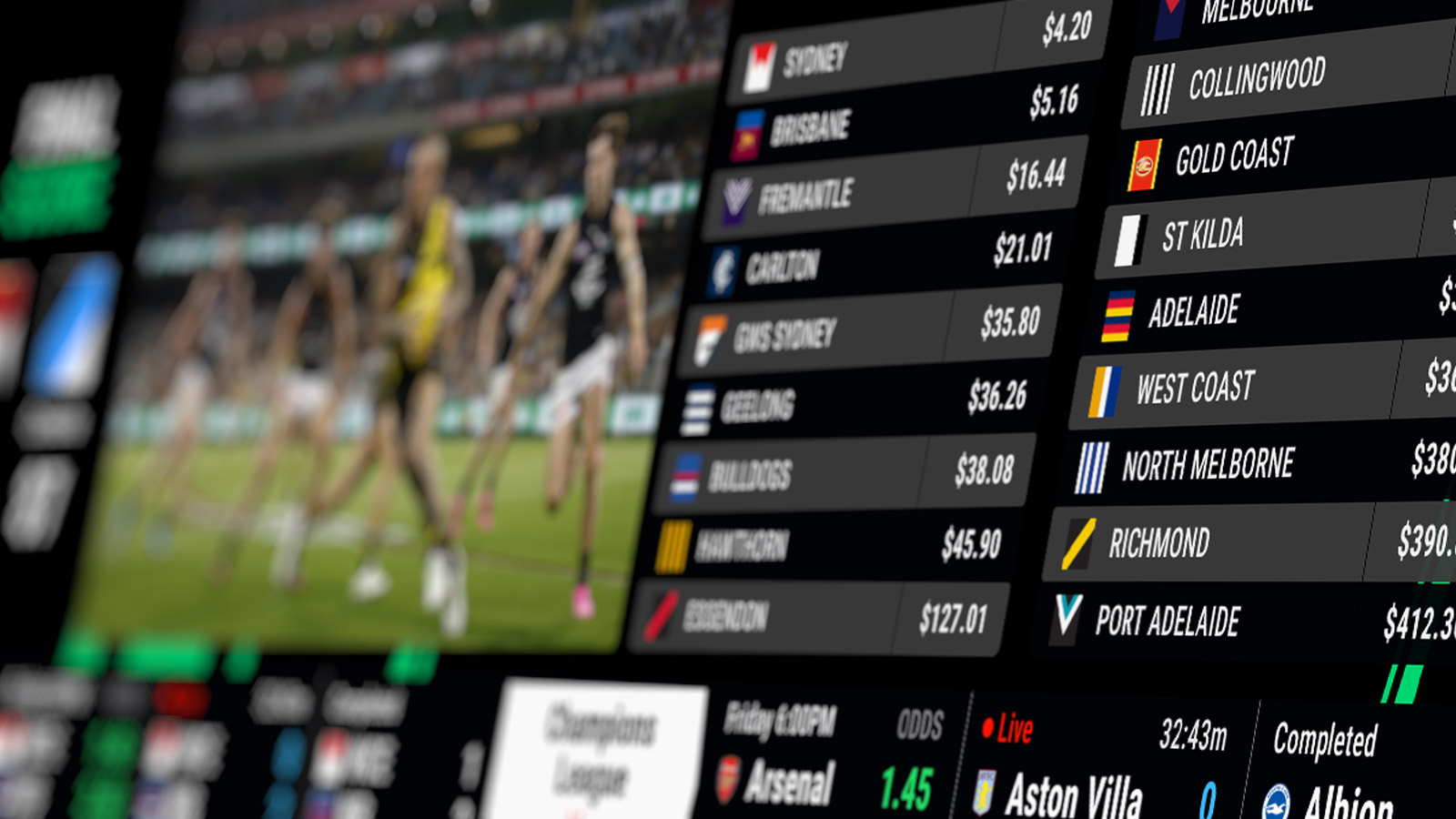
Live sport has always been built on moments. A game-winning play, a split-second decision, an upset no one saw coming. What’s changed is how those moments travel. Twenty years ago, a great moment lived in the stadium and on the broadcast. Today it lives on broadcast, on streaming, on stadium screens, on second screens, on social, and in highlight clips before the next play even starts. Real-time graphics are no longer a nice-to-have layer on top of a broadcast. They’re how the broadcast keeps up with the audience.
The audience has changed faster than the broadcast
Modern live sports audiences consume content across multiple screens simultaneously. They watch the game on TV with a phone in their hand, checking live odds, fantasy stats, tactical analysis, and social commentary. Attention is divided by default. Expectations for what the broadcast itself should deliver are higher than ever.
If the audience already knows the score, already sees the stat, already has the player’s heat map on their phone — what is the broadcast actually adding? The answer has to be: context, timing, and visual storytelling that no second-screen app can do better. That’s what real-time graphics deliver, when they’re built well.
What graphics actually do for the viewer
Done right, live graphics translate raw data into visual storytelling. A scoreboard isn’t decoration — it’s the answer to “where are we.” A leaderboard isn’t filler — it’s the structure of the race. A stat callout isn’t a sponsor read in disguise — it’s context that makes the play matter.
For unfamiliar sports, this matters even more. A new viewer watching cricket, rugby, or motorsport for the first time has no internal model of what’s happening. The graphics are how they build one. The faster and clearer the graphics, the faster the new viewer becomes a fan. The broadcasters that take this seriously grow their audience. The ones that don’t lose them in the first five minutes.
The synchronization problem
Modern productions don’t have one screen — they have many. The TV broadcast, the streaming feed, the stadium video board, the in-app overlay, the social clip. Each one has its own audience, its own latency budget, and its own brand requirements. When the score updates, it has to update everywhere, almost at the same time, looking like it came from the same production.
That synchronization is the real engineering challenge. It’s not enough to have great graphics on the main broadcast — if the stadium screen is fifteen seconds behind, the fans in the venue have a different game than the fans at home. Solving this requires a graphics platform that treats every output as a first-class destination, not just a copy of the main feed.
Where the commercial value lives
Live graphics aren’t just an audience experience. They’re a commercial product. Every overlay is potential sponsor inventory. Every stat callout can be co-branded. Every regional feed can carry localized advertising. The same data pipeline that powers the broadcast can power a betting integration, a fantasy app, a venue display, and a sponsor microsite — each generating revenue that didn’t exist before the graphics were tied together.
This is the shift rights holders are still catching up to: graphics are no longer a production cost. They’re a revenue surface.
What gets in the way
The thing that stops most rights holders from running live graphics as well as they could isn’t budget. It’s the architecture they inherited. Graphics rigs that were specified five years ago can’t scale to multi-platform output. Data pipelines that were built one feed at a time can’t add a new source without breaking. Production teams that own one broadcast can’t deliver fifteen.
The way out isn’t a bigger version of the same system. It’s a different kind of system — cloud-native, web-rendered, data-first. That’s what we build.
Real-time graphics are infrastructure now
Live sport will always be about the moments. The organizations that can capture, contextualize, and amplify those moments instantly — on every screen that matters — are the ones who win the audience. We work with broadcasters, rights holders, and event producers to make that happen.
Want your live sports graphics to actually keep up with the audience? Let’s talk.