
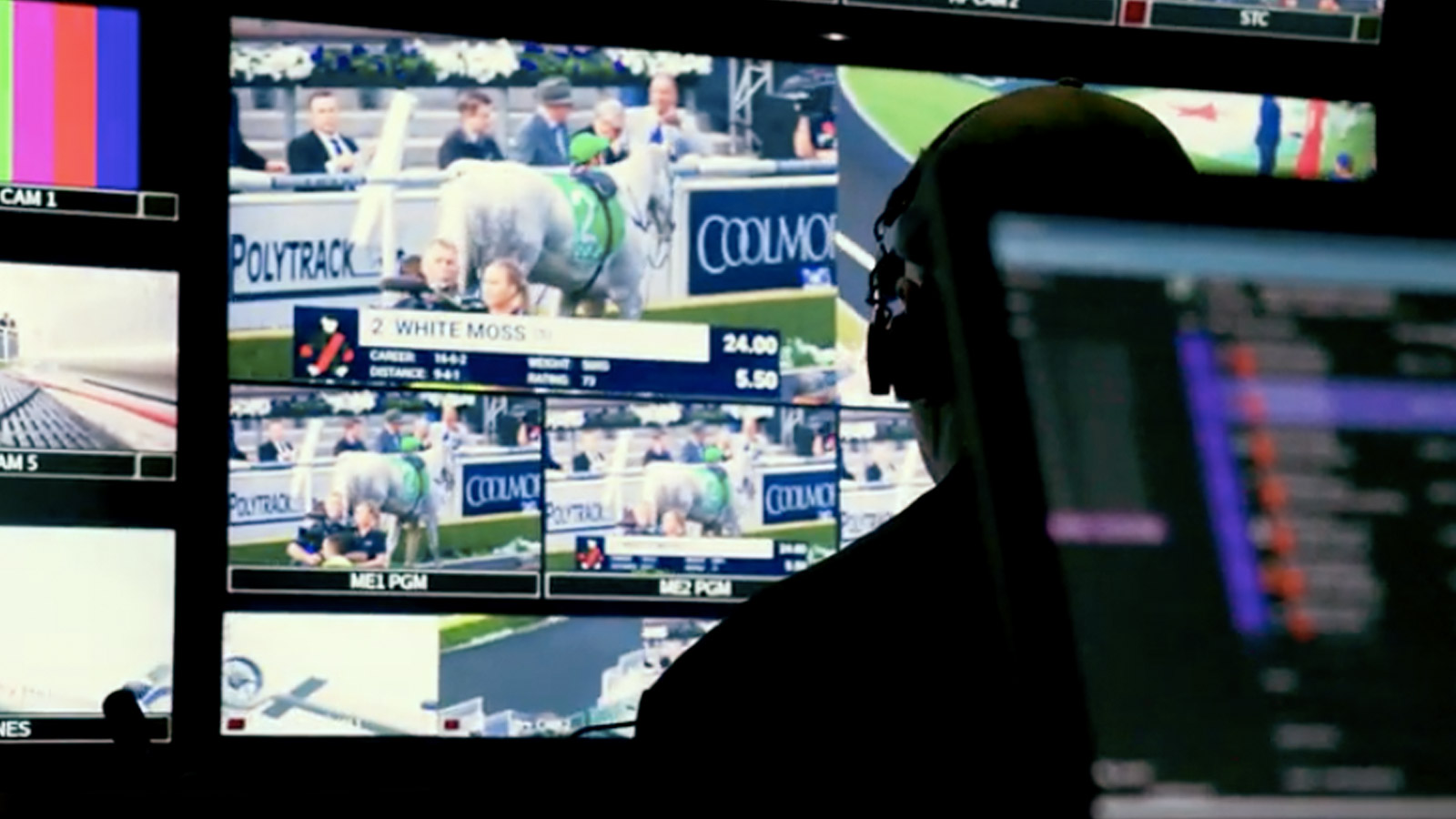
Every broadcaster and rights holder is being asked the same question: how do we produce more channels, more streams, more localized feeds — without our cost base growing in lockstep? The traditional answer (more hardware, more operators, more truck space) doesn’t survive the math of OTT and FAST. The new answer is a cloud-first graphics stack that lets one team output across many productions in parallel. That’s the architecture we built Lightning Visuals around.
The economics no longer work for legacy graphics
Linear broadcast was built on a one-truck-one-show model. Each production needed its own graphics rig, its own operator, its own redundancy. That model worked when a sport had one or two feeds. It breaks down when a single rights holder is asked to produce 20 parallel streams across a streaming platform, a FAST channel, a regional sports network, and a betting partner, each with its own brand skin and data overlay.
The cost of doing this with traditional broadcast graphics scales roughly linearly: every additional output requires additional hardware and additional operators. Five times the channels means close to five times the cost. That’s not a scaling strategy. That’s a procurement order.
What cloud-first graphics actually change
A cloud-first live graphics system breaks the link between number of outputs and cost of operation. Three things change.
Concurrency stops costing more. A web-native rendering pipeline can drive dozens of simultaneous productions from the same data source, the same templates, and the same operator console. Adding an output becomes a configuration change, not a hardware order.
Automation replaces operators. When graphics are triggered by data events — a goal scored, a lap completed, a contestant eliminated — they no longer need a human to fire each cue. One operator can supervise outputs that would previously have required ten.
Pre-production becomes anywhere. Cloud-based templates can be built, reviewed, and signed off remotely. Pre-event testing happens against the live data feed before crews arrive on site, not in a truck park at 6am.
Where the savings actually come from
The headline number is hardware. But in practice, the bigger saving is people. Specialist broadcast graphics operators are expensive and, in most markets, scarce. A system that lets one trained operator deliver four or five outputs is more valuable than one that simply reduces rack space.
The second saving is rehearsal time. Traditional graphics systems require physical setup before you can exercise them. Cloud-based systems can be rehearsed asynchronously, against historical data, weeks before broadcast day. That’s not just cheaper — it’s how you reduce the risk of going live with something untested.
What to look for in a platform
If you’re evaluating cloud-based graphics for scaled output, three capabilities matter more than the others.
The platform must support genuinely concurrent outputs from a single instance, not parallel instances with parallel licenses. It must integrate with the data and timing providers you already use, rather than requiring you to migrate. And it must let your team customize templates without engineering support — because the bottleneck on scaling output is rarely the renderer; it’s the design queue.
Lightning Visuals is built around these three principles. Our cloud-first live graphics system is used by broadcasters, rights holders, and venue operators to scale output across linear, streaming, FAST, and digital displays — without a proportional increase in cost.
Where to start
If you’re staring at a content roadmap that’s growing faster than your production team, the first step isn’t a new hire or a new truck. It’s a conversation about what your current graphics workflow could already do if it weren’t tied to fixed hardware. We’re happy to have that conversation.
Want to scale your broadcast output without scaling your costs? Talk to our team.